Admin
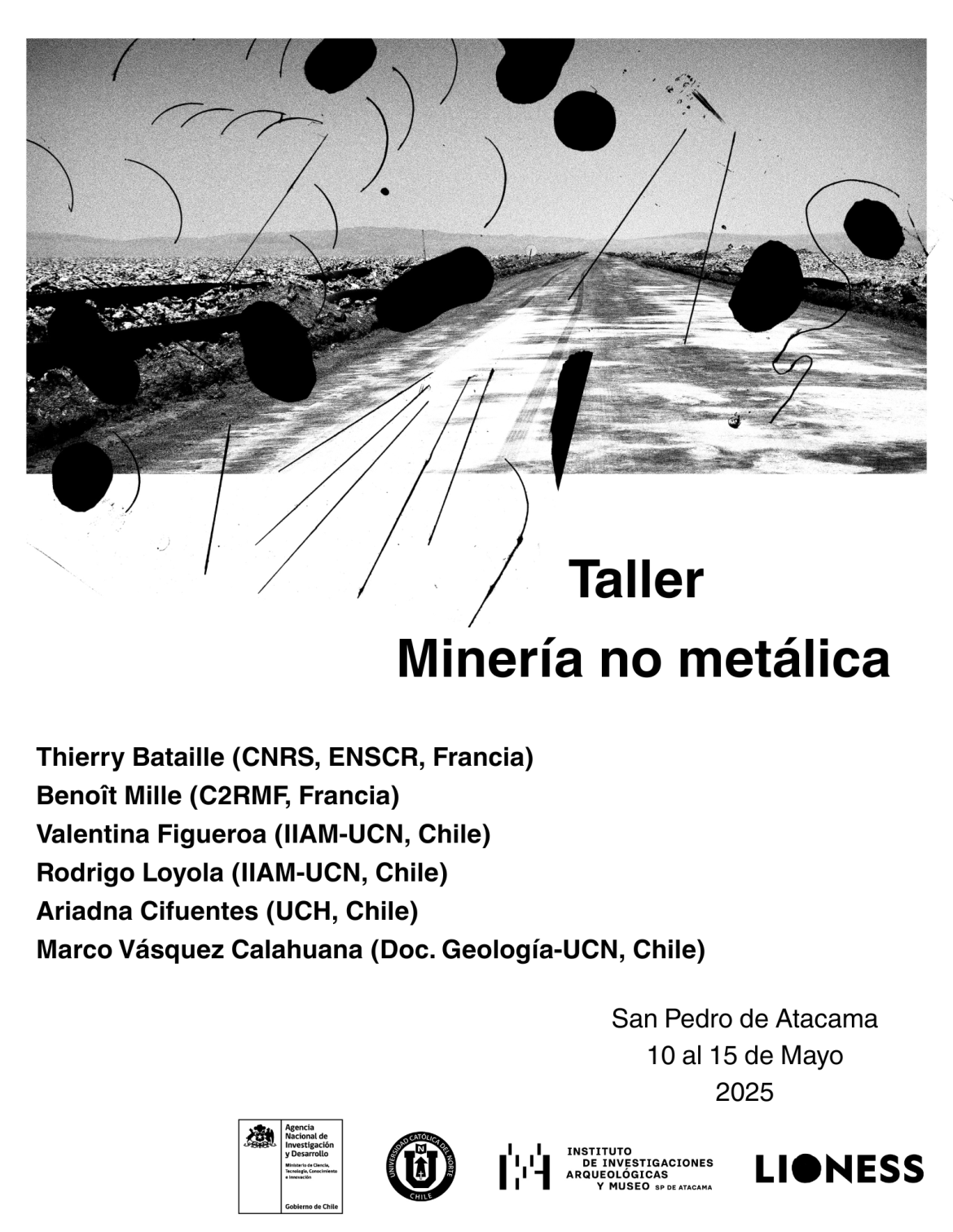
Taller “Minería no metálica” en San Pedro de Atacama
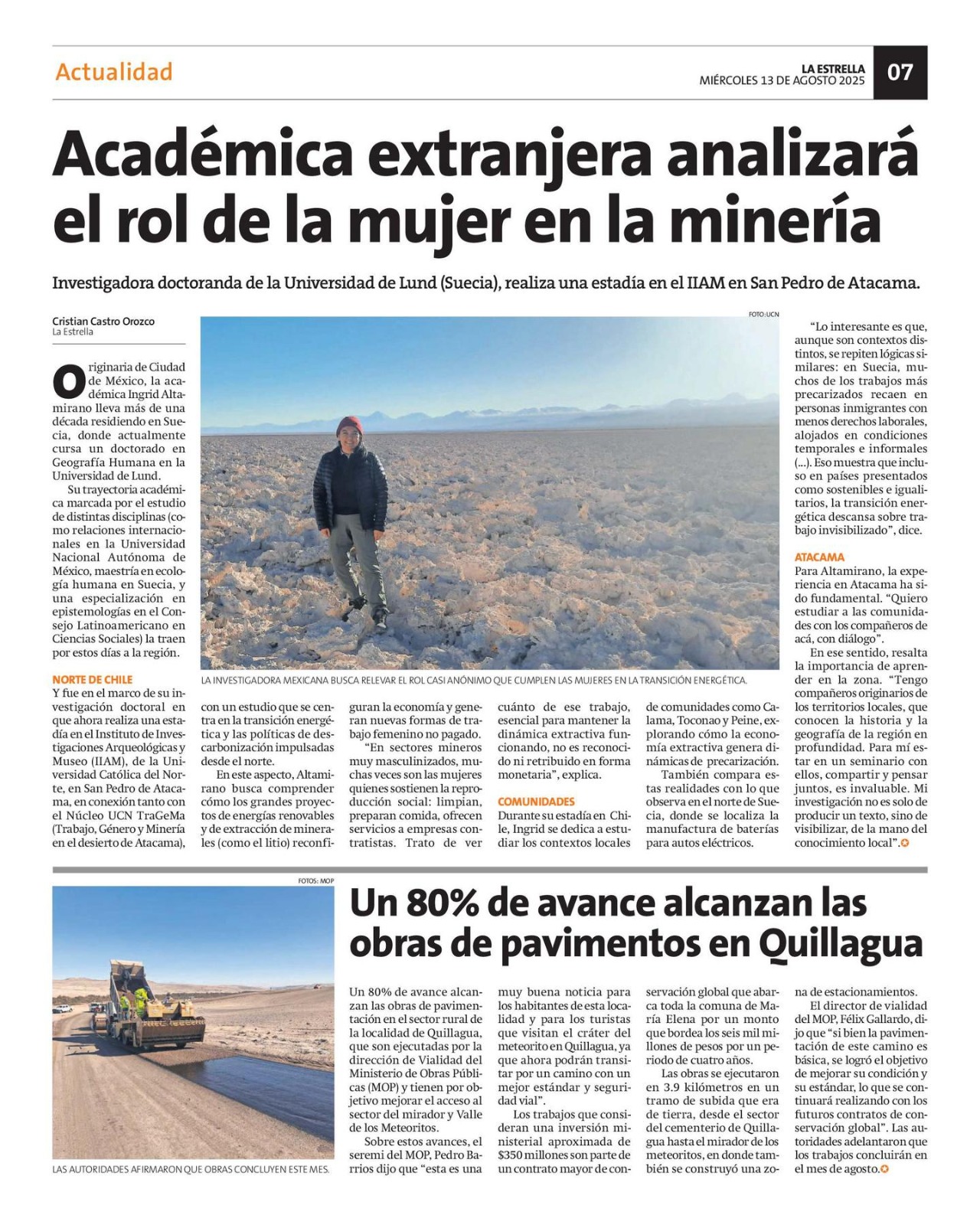
Entre el 10 y el 15 de mayo de 2025 se realizó en San Pedro de Atacama el taller Minería no metálica, instancia interdisciplinaria que reunió a investigadores e investigadoras de Chile y Francia para abordar el estudio, historia y problemáticas actuales de la extracción no metálica en el desierto de Atacama.
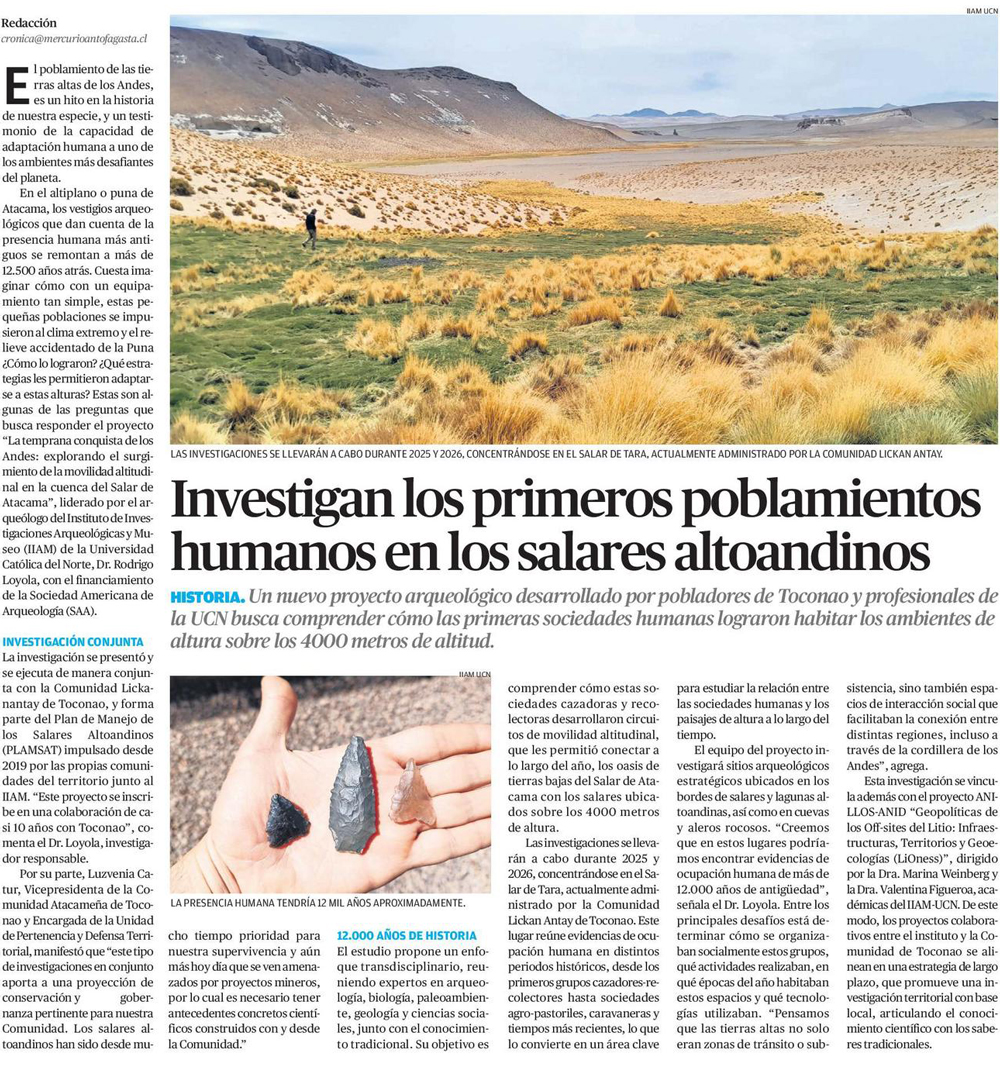
Participaron Thierry Bataille (CNRS, ENSCR, Francia), Benoît Mille (C2RMF, Francia), Valentina Figueroa y Rodrigo Loyola (IIAM-UCN, Chile), Ariadna Cifuentes (UCH, Chile) y Marco Vásquez Calahuana (doctorando en Geología, UCN). El taller fue organizado por el Instituto de Investigaciones Arqueológicas y Museo de la Universidad Católica del Norte, en colaboración con la Agencia Nacional de Investigación y Desarrollo (ANID) y el proyecto LIONESS.
Convocatoria postdoctoral
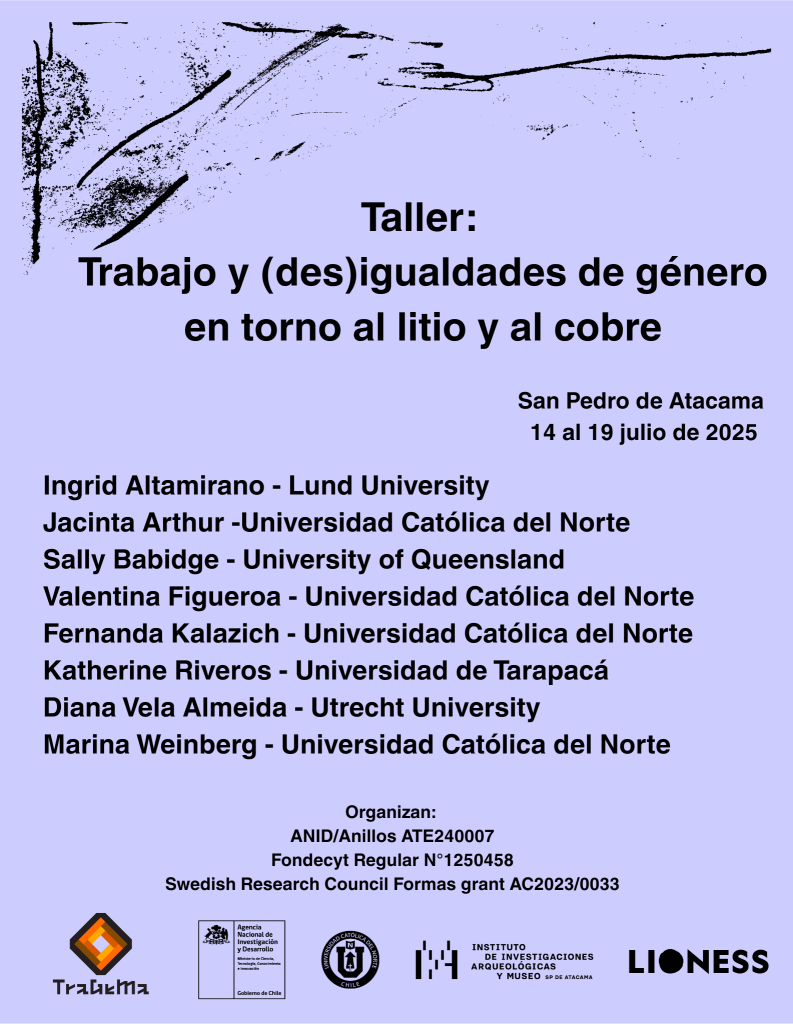
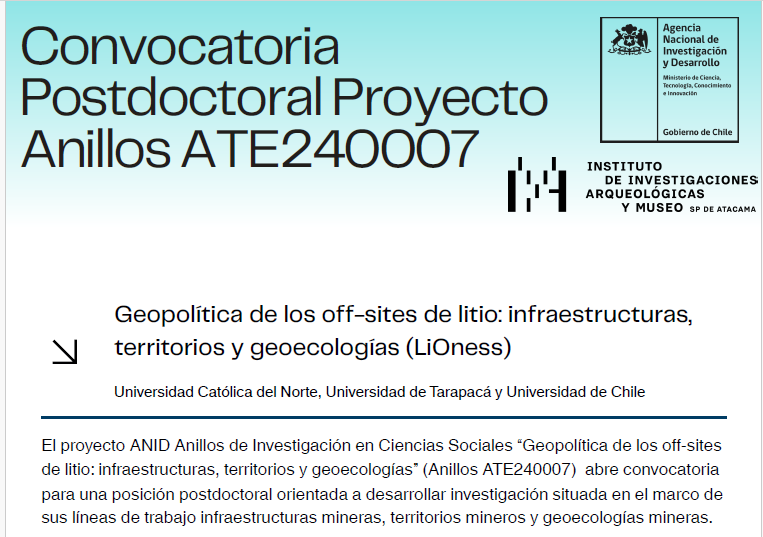
El proyecto ANID Anillos de Investigación en Ciencias Sociales “Geopolítica de los off-sites de litio: infraestructuras, territorios y geoecologías” (Anillos ATE240007) abre convocatoria para una posición postdoctoral orientada a desarrollar investigación situada en el marco de sus líneas de trabajo infraestructuras mineras, territorios mineros y geoecologías mineras.
El proyecto LiOness tiene como objetivo estudiar los impactos sociales, políticos y ecológicos de la minería del litio más allá del Salar de Atacama, enfocándose en las transformaciones generadas en los territorios, infraestructuras y geoecologías que forman parte de los llamados off-sites del litio.
ABSTRACT
Copper and lithium mining in the Atacama Desert produces high levels of toxicity that threaten human and non-human health.
Establishing a dialogue between archaeology and anthropology, this chapter reflects on the past and present toxic impacts of these actions by following their tangible and intangible traces and remains since the establishment of the Chilean neoliberal dictatorship in 1973.
While these marks, or collateral effects, are sometimes perceived and observable, at other times they act so intimately at a cellular level that they become part of a local biopolitical heritage. The unstoppable growth of an infrastructure that supports the development of these extractive activities continues to produce toxic heritages under promises and fantasies of futuristic desires pushed forward by the dominant energy transition paradigm.
Revisa la publicación en el siguiente enlace https://www.taylorfrancis.com/chapters/oa-edit/10.4324/9781003365259-13/politics-mining-toxic-heritage-atacama-desert-marina-weinberg-valentina-figueroa?context=ubx&refId=f115b45b-b810-449a-94b0-e40c6300c839
Highlights
- The process of decarbonization of the planetary energy matrix obscures the profound transformations in the regions from which this material is obtained.
- Off-sites are diverse and greatly transformed socioscapes that frame not only the geophysical spaces, but also encompass vast worlds with specific and complex material, social, and symbolic dynamics.
- I introduce the off-sites not only as spaces/places but as an analytical concept that allows us to bring back and together many constituents that are intertwined within the multifaceted processes of lithium extraction, production, and distribution beyond the economic and productive realms.
Revisa el artículo completo en https://www.sciencedirect.com/science/article/pii/S2214790X23000990