Copper and lithium mining in the Atacama Desert produces high levels of toxicity that threaten human and non-human health.
Establishing a dialogue between archaeology and anthropology, this chapter reflects on the past and present toxic impacts of these actions by following their tangible and intangible traces and remains since the establishment of the Chilean neoliberal dictatorship in 1973.
While these marks, or collateral effects, are sometimes perceived and observable, at other times they act so intimately at a cellular level that they become part of a local biopolitical heritage. The unstoppable growth of an infrastructure that supports the development of these extractive activities continues to produce toxic heritages under promises and fantasies of futuristic desires pushed forward by the dominant energy transition paradigm.
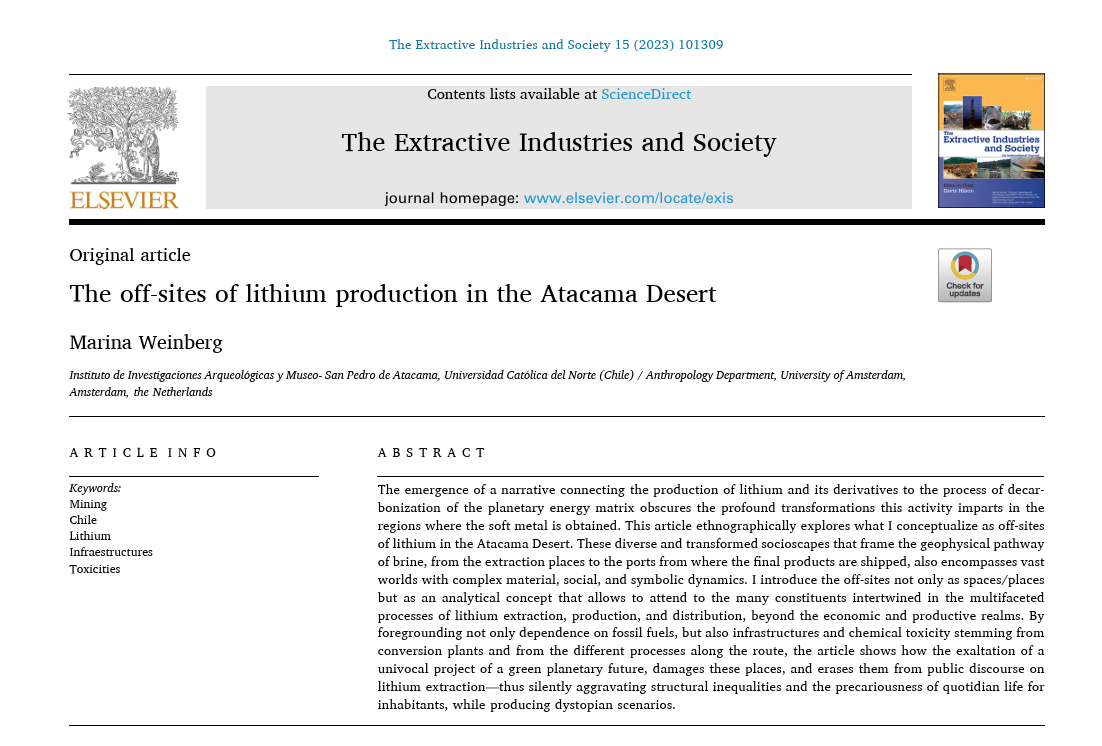
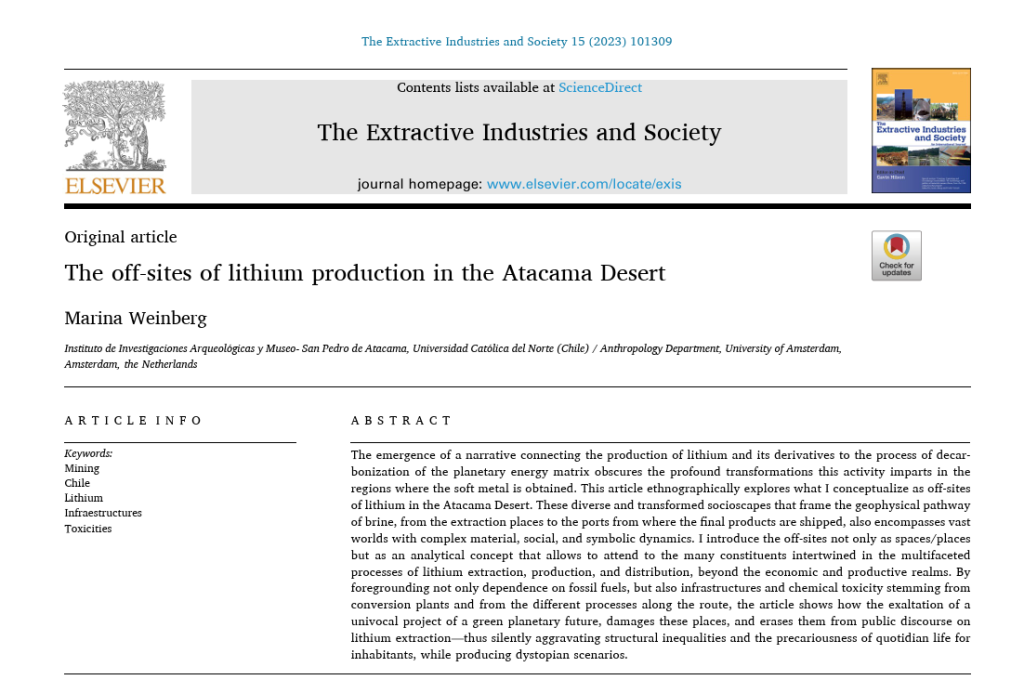
The process of decarbonization of the planetary energy matrix obscures the profound transformations in the regions from which this material is obtained.
Off-sites are diverse and greatly transformed socioscapes that frame not only the geophysical spaces, but also encompass vast worlds with specific and complex material, social, and symbolic dynamics.
I introduce the off-sites not only as spaces/places but as an analytical concept that allows us to bring back and together many constituents that are intertwined within the multifaceted processes of lithium extraction, production, and distribution beyond the economic and productive realms.